
Putin extends national paid leave to May 11

Putin extends national paid leave to May 11 muTu's Note - Read and Learn Chinese in 5 Minutes
Putin extends national paid leave to May 11

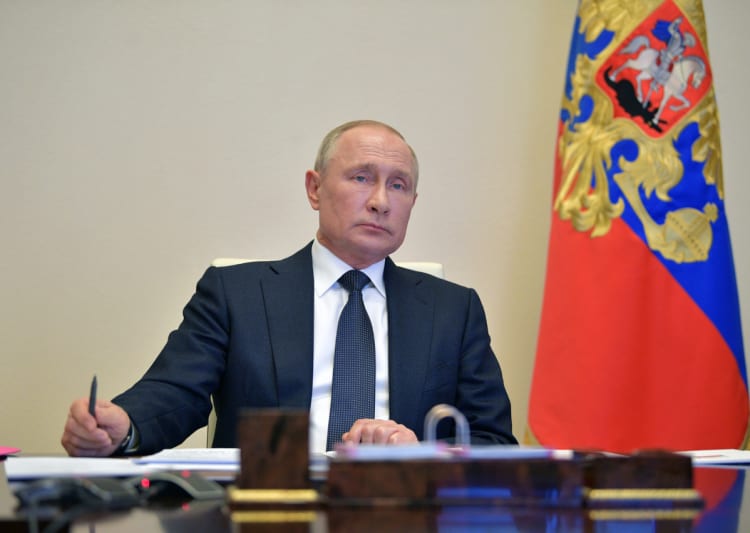
Russian President Vladimir Putin chairs a meeting with regional heads via a video link amid the coronavirus disease (COVID-19) outbreak at the Novo-Ogaryovo state residence outside Moscow, Russia April 28, 2020.

MOSCOW – Russian President Vladimir Putin on Tuesday extended the national paid leave introduced to contain the spread of COVID-19 to May 11.

“We are now facing a new, perhaps the most intense stage in the fight against the epidemic. The risks of getting infected have reached a climax. The threat, the mortal danger of the virus persists, and this can affect everyone,” Putin said in a televised address to the nation during his online meeting with the government and regional governors.

At the meeting, Putin ordered the government to prepare by May 5 a plan for the gradual lifting of restrictions related to the pandemic from May 12.

He also ordered the government to prepare a package of measures to support the economy.

Non-working days were previously introduced from March 30 to April 30 and regional authorities stopped the work of most enterprises.

Currently, most regions have introduced self-isolation or other movement restrictions. People are only allowed to go out to receive medical care, travel to work, shop at the nearest store or pharmacy, or walk a pet.

Russia on Tuesday reported 6,411 new COVID-19 cases over the past 24 hours, with the total number rising to 93,558.


The related posts:

What is COVID-19?

How protect yourself from COVID? Share this to your friends, Please!

9 questions about children’s COVID prevention, Collect it!

Latest guide on how to wear masks during COVID outbreak

Infographic: Everything about COVID-19 you want to know

Lastest Number of COVID cases(novel coronavirus) at April 27

Russia may use military resources to fight COVID19 Putin

Putin postpones V-Day parade amid COVID-19 pandemic


Tips: There are Chinese translations here, but they are hidden. you need to leave your own translation or other content in the comment box and Refresh to view it.


from WordPress https://ift.tt/2SjWAu4

Comments

Popular posts from this blog

童话 Fairy Tales

童话——Fairy Tales——tóng huà Fairy Tales Pinyin: tóng huà gù shì bàn suí zhe měi gè rén de chéng zhǎng 。 fù mǔ yī bān huì zài xiǎo hái shuì jiào zhī qián gěi tā men dú gù shì 。 tóng huà duì hěn duō rén de zhí yè shēng yá yǒu hěn dà de yǐng xiǎng , yóu qí shì dǎo yǎn hé zuò jiā , tā men yǐ zhè xiē jīng diǎn tóng huà gù shì wéi jī chǔ chuàng zào xīn de gù shì 。 zhè xiē xū gòu de shì jiè gěi rén men dài lái le jī jí de yǐng xiǎng 。 Chinese: 童话故事伴随着每个人的成长。父母一般会在小孩睡觉之前给他们读故事。童话对很多人的职业生涯有很大的影响,尤其是导演和作家,他们以这些经典童话故事为基础创造新的故事。这些虚构的世界给人们带来了积极的影响。 English: Everybody grows up with fairy tales. Before they sleep, their parents read stories to them. Fairy tales have great influence on many people’s career, especially the directors and writers. They create new stories on the basis of these classic fairy tales. This fictional world brings something positive to people.

The importance of early rising

The importance of early rising muTu Note - Learn Chinese with Chinese Girl Just as Benjamin Franklin says, ” Early to bed and early to rise, makes a man health y, wealthy and wise. ” It’s true that early rising benefits us in many ways. 正如本杰明·富兰克林所说的:“早睡早起能给一个人带来健康、财富和智慧。”早起可以在很多方面给我们带来益处。 首先,它帮助我们保持健康。我们需要新鲜空气,而一天中早晨的空气最新鲜了,而且,通过晨练我们还可以改善我们的健康。其次,早起也有助于提高我们的学习效率,在早晨我们学得更快。再次,早起可以让我们为一天的学习制订计划,因为没有计划我们就不能很好地学习。早起还能给我们充足的时间为功课作准备。 因此,我们强烈建议那些起得晚的同学应该尽量早起。 Just as Benjamin Franklin says, ” Early to bed and early to rise, makes a man health y, wealthy and wise. ” It’s true that early rising benefits us in many ways. First, it helps to keep us fit. We all need fresh air, but the air is never so fresh at other times of the day like that in the early morning. Besides, by taking morning exercises we can improve our health . Second, it can help us in our studies. In the morning we can learn more quickly. Third, it can enable us to plan our work for the day. We cannot work well without...

Where Did Chinese Get Their Spicy Kicks Before the Chili Pepper?

Where Did Chinese Get Their Spicy Kicks Before the Chili Pepper? muTu Note - Learn Chinese with Chinese Girl What is the most iconic Chinese food? Americans might say 宫保鸡丁 (gōng bǎo jī dīng Kung Pao chicken), while Japanese insist that 麻婆豆腐 (má pó dòu fu Mapo Tofu) is king. Even within China, most answers will be quite predictable, such as 水煮鱼 (shuǐ zhǔ yú spicy boiled fish), 麻辣小龙虾 (má là xiǎo lóng xiā hot and spicy crawfish), or 大盘鸡 (dà pán jī Big Plate Chicken). Notice any similarities? It seems that the red and spicy chili pepper(辣椒,là jiāo) is the through line that makes many Chinese dishes immediately recognizable. However, if you were paying attention in your history classes, you’ll know that the chilies we eat today are not a native(本土的,běn tǔ de) species(物种,wù zhǒng) of China. So the question is, what did ancient Chinese use in their kitchen to add that pinch of flavor to spice things up? The former way of writing 辣 better demonstrates the relation between 辣 and 辛. Befor...